
Ungardened Gardens
Dailies 003 🪷 Korean garden philosophy, a visit to New York, and re-introducing the studio.

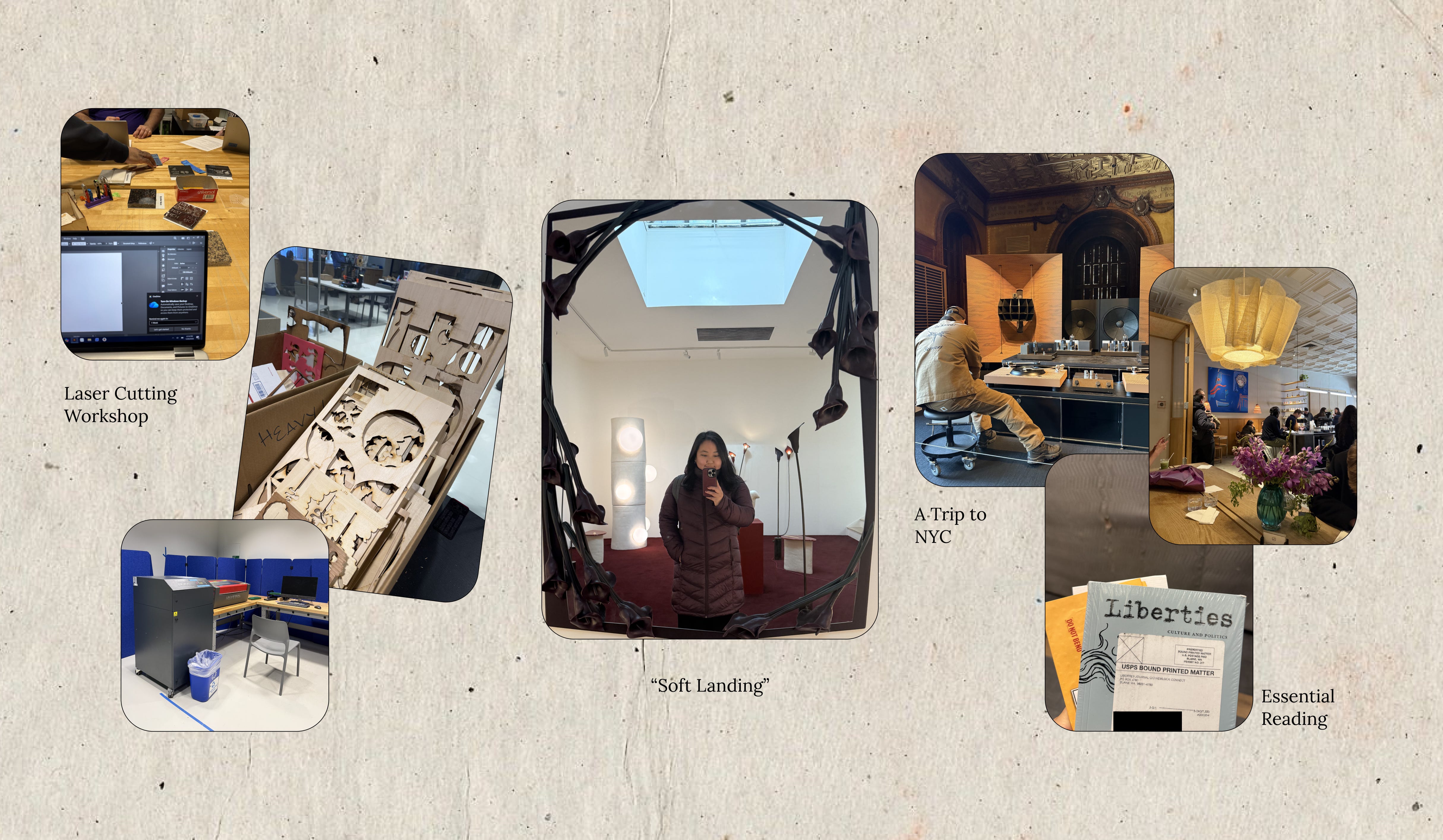
✦ snapshots from the camera roll
Dailies is a column I’m experimenting with sharing daily meditations, morning pages, and sounds. If you want to only receive certain updates, feel free to edit your settings. Lots of goodies in this one! Enjoy…
✦ meditations — morning pages
On Life’s Scope
I’ve been thinking a lot about my scope of life lately: everything within a metaphorical circle of what is getting my energy and attention right now. The honest territory of what I’m working with.
For a long time, I tried to organize that territory. Map it out, optimize it, make sure every corner was accounted for. In the same vein, people endlessly reference the age-old framework of Ikigai — the tidy intersection of what you love, what you’re good at, what the world needs, and what pays. (The modern-day yuppie loves a good framework.)
Ikigai is elegant on paper. I don’t think it’s wrong, but I’ve been sitting with why it’s never worked for me… I think it it treats your life like a problem that needs a solution. Popular visualizations of it encourage you to find the precise center of the Venn diagram. It creates a false promise of “arriving.”
In reality, I find life’s seasons to be sprawling and unwieldy to be able to force fit into a neat framework most of the time. It asks you to know, in advance, the shape of something that hasn’t taken form yet. And then you spend all your energy trimming toward a design you drew before you understood the true terrain of what’s within and true to you.
Structure matters — I’m not abandoning that. But somewhere along the way I realized I wanted to start patiently noticing what was trying to grow organically. This newsletter you’re reading is one of those experiments.
Ungardened Gardens
In Korean, the original word for garden is wonrim (원림, from the Chinese 園林). It translates to “forest-garden,” but within Korean culture it’s come to mean something more specific: the philosophy of elevating nature without the touch of the human hand.
If you’ve ever visited a botanical garden, you’ve likely experienced a Chinese or Japanese one. Korean gardens are far less common outside Korea — and there’s a reason. A Chinese garden recreates the essence of nature within a walled retreat: rockeries, moon gates, painterly scenes you can recreate. A Japanese garden abstracts nature into extremely precise, symbolic arrangements. But a Korean garden relies on the actual landscape: the specific mountains, the existing streams, the terrain already there. They aren’t as portable since it’s difficult to export what relies on the native landscape of a place.


Overly designing a space goes directly against the Korean tradition (ironic given how over manicured Korean cultural exports and modernism have become). The approach treats nature as a benevolent partner rather than a chaotic force to be tamed. Rooted in geologic stability and Neo-Confucian humility, ancient Korean landscapers sought to inhabit nature as gently as possible. They placed a simple pavilion in an existing forest, letting the land stay as it is. The technique of chagyeong (차경), or “borrowed scenery,” seamlessly integrates distant peaks into the garden’s composition. The gardener’s job is to not impose a vision as much as possible. They aim to think of themselves as a guest of the mountain — emptying the space of human ego so the existing landscape can speak for itself.
There’s a 500-year-old garden called Soswaewon (소쇄원), built by a scholar named Yang San-bo. Its design is chagyeong in practice: pulling the surrounding scenery in rather than building walls against it. Its walls were constructed with deliberate openings so a natural mountain stream could flow through the grounds uninterrupted. The concept behind Soswaewon — anbinnakdo (안빈낙도) — is all about finding comfort in simplicity, taking pleasure in an honest life.
Korean gardens aren’t seen as aesthetically grand. But I think there’s a deep poeticism in letting nature stay ungardened…
You can probably see where I’m taking this point. (:
The ungardened garden is closer to how I’ve started to view the scope of my life. Following instinct. Letting curiosity lead instead of a rigid framework. Not forcing a shape onto things, but paying attention to what emerges when I stop over-designing.
A Living Scope
There’s a word from ecology that’s been making the rounds again: rewilding. Removing the interference and letting a landscape return to what it naturally wants to be. Not neglect, but recognition.
I’ve been rewilding my life! Again, structure is still there and matters, but it arrives on its own terms now. I follow what feels alive. I hold myself back from hedging things before they’ve even had a chance to take form.
Viewing life with a lens of “scope” is useful and effective. There are only so many hours, so much energy, so much attention. But within that scope, let’s not forget that everything is living. Growing. Shifting. If your scope were a circle, the question isn’t how to optimize the blobs inside it. It’s whether you’re willing to let the landscape breathe — to trust that what grows, might be closer to what you actually need than anything you could have pre-designed.
What would grow back if you let it? 🌱
(Note: These reflections and meditations are simply how I like to begin my day — an invitation to build a little internal momentum, not a mandate to feel good at all costs. They are not an attempt to bypass grief, uncertainty, or the very real darkness of the world. But this practice exists alongside that awareness, not in denial of it. My hope in sharing this is to transfer some of this good energy.)
✦ sounds (n.) — this mornings playlist
To dive right into focus mode, listen to this upbeat set in nature: My YouTube algorithm is nearly half all DJ sets now. I aim to look for ones where a real person is obviously behind it. So many AI videos now that trick us! Enjoy:
To feel like you’re at a house party, here’s something from Australia: Maybe it’s because Aussies are on an island, but there’s a lot of cool pockets of culture that I see displayed online. This one especially had me smiling:
✦ spaces — places visited and liked
Cooper Hewitt & NYC: I crashed at a friends house in Brooklyn (near my old neighborhood) for a few days. The first place I went was the Cooper Hewitt Museum to experience the Ojas room. It was a nice way to start my stay. This time, I was in NY purely for pleasure and it made a big difference. Staying at hotels and going to workshops is great, but it felt like my old home again this time. Saw lots of friends and galleries. I should do it more often.


Milken Center for Advancing the American Dream: I visited a peculiar place near the White House. As they describe it, it is an “interactive experience dedicated to the idea that everyone should have an equal opportunity to pursue a life of meaning and fulfillment.” In reality, I found it to be like a colorful Severance set doubling as a manicured pro-capitalism shrine as it was founded by Michael Milken. To be honest, it all felt a bit North Korean charade-y… focused on an ideal that feels far away for most of the population today. (It was free and no money or information was contributed on my end.) One thing that did stand out to me was how data was embedded into the space itself. Something I hadn’t seen before.


✦ field notes: things digested, created
Re-introducing Studio Emerline: I updated my Substack about and have begun to formalize some of the columns here. Take a look! :)
I’m editing a vlog from my trip to Sedona for an architecture immersion program. Hoping to finish it this week. 🏜️ Here’s the first few seconds of it as a preview:
✦ nice finds


Loved this piece by Van Newman (my old colleague and all-around talented artist): Day & Night: The Emerging Aesthetics of New Wave Neo-Ludditism.
“This is simply what design (and culture, for that matter) does: it swings one way and swings back in the other direction. I think what’s exciting about this moment is that there are clearly enough touch points that we can place on a wide enough spectrum that it has two ends to swing from. Each end still leads to a more intentional, less online life.”